
Rancho Cucamonga Commercial Real Estate Investing
Basis, Risk, and Asset Selection
Rancho Cucamonga rewards investors who underwrite the asset, not the market. The case for the market itself is settled and well understood: the city sits at the logistics center of the Inland Empire with freeway, rail, and air access most competing submarkets cannot match. That advantage is durable, and it is also priced in. Which means the question that decides a return here is not whether the market is strong. It is whether a given asset, at a given basis, earns enough to justify entering a market everyone already knows is strong.
That distinction, a strong market versus a well-priced deal, is the thread running through everything below: how return actually gets generated once capital is deployed, where the real risk sits, and what discipline separates the investors who do well here from the ones who buy the reputation. If you are still evaluating the market itself rather than a specific deal, start with the Rancho Cucamonga commercial real estate market guide, which covers the history, demographics, and infrastructure behind the thesis. This guide assumes that case and moves to the underwriting.
Why is Rancho Cucamonga priced the way it is?

Because the demand underneath it is national in scale rather than local, and national-scale demand gets repriced quickly once capital notices it. The volume is not abstract. Port of Los Angeles facts and figures report that the San Pedro Bay complex formed by the Los Angeles and Long Beach ports handles roughly 31 percent of all containerized international waterborne trade entering and leaving the United States, and Ontario International Airport traffic statistics show a facility that consistently ranks among the top ten U.S. cargo airports, four miles from the city line. Industrial product here is a function of that volume, not of local growth.
The composition of the local labor force tells an investor how concentrated the exposure to that volume is. Bureau of Labor Statistics occupational employment data for the metro area shows transportation and material moving as the single largest occupational group, at roughly 16 percent of local employment. That is the workforce that fills the corridor’s distribution space, and it is also the clearest available measure of how much of the local economy moves with goods movement.
Put those together and the market behaves in a specific way. Rancho Cucamonga trades less like a speculative growth market and more like a core-plus one. You are typically not betting that the area will be discovered. You are underwriting whether you can buy quality at a basis that still leaves room for return after a strong market has already repriced most of the obvious upside.
The public investment layer reinforces that read without changing it. Brightline West, the Cucamonga Station multimodal project, and the city’s infrastructure financing district all signal a market being built for decades rather than patched for years, which supports value but does not create a discount. Those projects are covered in full on the market guide. For underwriting purposes the relevant point is narrower: they are already reflected in what sellers are asking near the station.
What generates return in this market?
Tenant durability and entry basis, in that order, and neither is a market-level question. In the dominant industrial segment, performance is tied to the quality and creditworthiness of tenants whose businesses depend on the corridor staying a distribution hub. A well-located warehouse with a strong tenant and a long lease behaves like an income instrument, and that is the profile most capital in this market is buying.
The corridor has sustained strong occupancy across multiple cycles, which is the structural truth worth underwriting. The transactional truth, what cap rates and rents are doing this quarter, moves with interest rates and national demand and should be checked against current data before any deal rather than assumed from the market’s reputation. The upstream volume that feeds that demand is published monthly and free to check: Port of Los Angeles container statistics, Port of Long Beach port statistics, and Ontario International Airport cargo and passenger statistics. Current population, employment, and logistics figures for the corridor are tracked on the Rancho Cucamonga market infographic, updated on a regular schedule specifically so investors are not underwriting off a stale number.
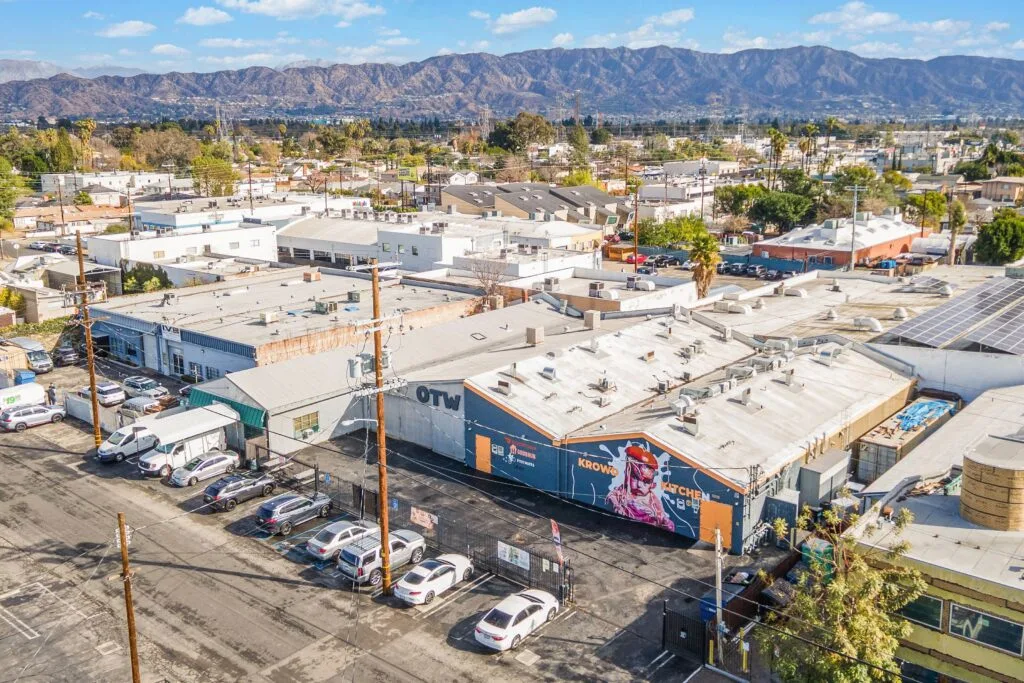
Beyond industrial, the investable picture broadens but narrows in scale, and the selection question sharpens. Industrial suits capital seeking income-like stability from long-leased credit tenants. Necessity retail and medical office suit investors underwriting to the residential base, at smaller ticket sizes and with more operational involvement. Multifamily competes for the workforce that the logistics economy itself employs, and carries the most value-add opportunity in older stock. None of these is a secret, which is exactly the point: in Rancho Cucamonga the edge comes from selection and basis within known-good asset classes, not from finding an undiscovered one.
That breadth cuts both ways. It means there is more than one way to put capital to work here. It also means being right about Rancho Cucamonga in general does not protect against being wrong about a specific building, tenant, or basis, which is where the real risk in this market actually sits.
What are the honest risks of investing here?
Three risks matter, and each has a specific local counterweight an investor can actually check.
1. Entry pricing
The market’s strength is well understood, so compressed pricing can leave thin margins for error. This is the risk that catches disciplined investors, because it does not feel like risk at the point of purchase. The counterweight is that the same infrastructure depth that drove pricing also supports it: an asset bought at a fair basis in this corridor is backed by demand drivers that do not evaporate in a single down cycle, which is not true of markets that ran up on momentum alone. The practical test is whether the deal pencils conservatively at current financing costs, not whether the market feels comfortable.
2. Concentration in goods movement
A submarket built on logistics carries exposure to shifts in trade volume, automation, and supply-chain reshoring, and that exposure is measurable rather than theoretical. The federal occupational data above is the clearest statement of it. There is also a specific, near-term version of this risk that most Inland Empire underwriting has not yet priced: the Barstow International Gateway, approved in June 2026, is explicitly designed to move international-to-domestic container transload out of the basin and into the high desert. If a target building’s tenant does that transload work for cross-country freight, that demand has a stated relocation path. If the tenant serves regional distribution into the Southern California consumer market, it does not. That distinction belongs in the underwriting, not in the market summary.
The broader counterweight is that Rancho Cucamonga is not a single-purpose warehouse district. The residential base, the transit and rail investment, and the diversity of retail, medical, and multifamily demand give the area more than one economic leg to stand on. The market guide covers the freight rail picture in full if you want the structural version of this argument before applying it to a deal.
3. Operational and entitlement timelines
Entitlement, environmental, and development timelines in California are long and uncertain, and that is a real cost of doing business rather than something to wish away. The response is to price it in and to partner with people who have already moved deals through it. The city has also put a financing mechanism behind the problem: the Rancho Cucamonga Enhanced Infrastructure Financing District funds public infrastructure on underdeveloped land inside the city limits. For an investor, that is the difference between a market that acknowledges its supply constraint and one that is funding a way through it. It does not shorten a specific entitlement, and it should not be underwritten as if it does.
Finding the right execution partner is itself part of managing all three. A firm with a long transaction history in this specific corridor has seen how these risks actually play out across cycles, which is a different kind of knowledge than reading about the market from the outside. Le Investment Group has closed more than $2.5 billion in Inland Empire commercial real estate transactions, holds a 2024 CoStar Power Broker Award, and operates in California under DRE No. 01923766. How LIG reads each corridor and asset class in transactions, and what its Advisory, Financing, and Brokerage teams do at each stage, is set out on the brokerage page rather than repeated here.
What should a smart investor understand before acting?
That the decision is won or lost on basis and asset selection, not on the market thesis, which is already sound. Anyone can recite why Rancho Cucamonga is a strong logistics market. The investors who do well are the ones who translate that consensus into discipline: underwriting the specific tenant, the specific lease, and the specific entry price rather than buying the area’s reputation at any number.
Practically, that means three things. Know which asset class matches your return profile and hold period before you look at deals, because industrial, retail, medical office, and multifamily here behave very differently. Verify every current figure against primary data at the moment of underwriting rather than relying on what the market was doing last year; the port, airport, census, and state labor sources linked throughout this guide are where to start. And treat local execution, brokerage relationships, tenant knowledge, and entitlement experience as part of the return, because in a market this well-priced the edge is in the execution rather than the thesis.
The bottom line
Rancho Cucamonga is a market to invest in with conviction and discipline in equal measure. The thesis is real and durable. The work is in the selection, the basis, and the partner who helps close the gap between the two.
Ready to put this thesis to work?
Need the market case first? Read the Rancho Cucamonga commercial real estate market guide. Ready to look at corridors and inventory? Start with the Rancho Cucamonga CRE brokerage page.
FAQs: Rancho Cucamonga Commercial Real Estate Investing
Sources
- U.S. Bureau of Labor Statistics, Occupational Employment and Wages, Riverside-San Bernardino-Ontario. Occupational mix and employment concentration.
- California Employment Development Department, Riverside-San Bernardino-Ontario MSA. Nonfarm employment and unemployment by county.
- Port of Los Angeles, Facts and Figures. San Pedro Bay share of U.S. containerized trade.
- Port of Los Angeles, Container Statistics. Monthly and annual TEU volume.
- Port of Long Beach, Port Statistics. Monthly and annual TEU volume.
- Ontario International Airport, Statistics. Passenger counts and air cargo tonnage.
- BNSF Railway, Barstow International Gateway approved by Barstow City Council (June 17, 2026). BIG scope and stated purpose of relocating transload from the basin.
- City of Rancho Cucamonga, Enhanced Infrastructure Financing District. District formation, boundaries, and governance.
Rancho Cucamonga Commercial Real Estate Investing
Basis, Risk, and Asset Selection
Rancho Cucamonga rewards investors who underwrite the asset, not the market. The case for the market itself is settled and well understood: the city sits at the logistics center of the Inland Empire with freeway, rail, and air access most competing submarkets cannot match. That advantage is durable, and it is also priced in. Which means the question that decides a return here is not whether the market is strong. It is whether a given asset, at a given basis, earns enough to justify entering a market everyone already knows is strong.
That distinction, a strong market versus a well-priced deal, is the thread running through everything below: how return actually gets generated once capital is deployed, where the real risk sits, and what discipline separates the investors who do well here from the ones who buy the reputation. If you are still evaluating the market itself rather than a specific deal, start with the Rancho Cucamonga commercial real estate market guide, which covers the history, demographics, and infrastructure behind the thesis. This guide assumes that case and moves to the underwriting.
Why is Rancho Cucamonga priced the way it is?
Because the demand underneath it is national in scale rather than local, and national-scale demand gets repriced quickly once capital notices it. The volume is not abstract. Port of Los Angeles facts and figures report that the San Pedro Bay complex formed by the Los Angeles and Long Beach ports handles roughly 31 percent of all containerized international waterborne trade entering and leaving the United States, and Ontario International Airport traffic statistics show a facility that consistently ranks among the top ten U.S. cargo airports, four miles from the city line. Industrial product here is a function of that volume, not of local growth.
The composition of the local labor force tells an investor how concentrated the exposure to that volume is. Bureau of Labor Statistics occupational employment data for the metro area shows transportation and material moving as the single largest occupational group, at roughly 16 percent of local employment. That is the workforce that fills the corridor’s distribution space, and it is also the clearest available measure of how much of the local economy moves with goods movement.
Put those together and the market behaves in a specific way. Rancho Cucamonga trades less like a speculative growth market and more like a core-plus one. You are typically not betting that the area will be discovered. You are underwriting whether you can buy quality at a basis that still leaves room for return after a strong market has already repriced most of the obvious upside.
The public investment layer reinforces that read without changing it. Brightline West, the Cucamonga Station multimodal project, and the city’s infrastructure financing district all signal a market being built for decades rather than patched for years, which supports value but does not create a discount. Those projects are covered in full on the market guide. For underwriting purposes the relevant point is narrower: they are already reflected in what sellers are asking near the station.
What generates return in this market?
Tenant durability and entry basis, in that order, and neither is a market-level question. In the dominant industrial segment, performance is tied to the quality and creditworthiness of tenants whose businesses depend on the corridor staying a distribution hub. A well-located warehouse with a strong tenant and a long lease behaves like an income instrument, and that is the profile most capital in this market is buying.
The corridor has sustained strong occupancy across multiple cycles, which is the structural truth worth underwriting. The transactional truth, what cap rates and rents are doing this quarter, moves with interest rates and national demand and should be checked against current data before any deal rather than assumed from the market’s reputation. The upstream volume that feeds that demand is published monthly and free to check: Port of Los Angeles container statistics, Port of Long Beach port statistics, and Ontario International Airport cargo and passenger statistics. Current population, employment, and logistics figures for the corridor are tracked on the Rancho Cucamonga market infographic, updated on a regular schedule specifically so investors are not underwriting off a stale number.
Beyond industrial, the investable picture broadens but narrows in scale, and the selection question sharpens. Industrial suits capital seeking income-like stability from long-leased credit tenants. Necessity retail and medical office suit investors underwriting to the residential base, at smaller ticket sizes and with more operational involvement. Multifamily competes for the workforce that the logistics economy itself employs, and carries the most value-add opportunity in older stock. None of these is a secret, which is exactly the point: in Rancho Cucamonga the edge comes from selection and basis within known-good asset classes, not from finding an undiscovered one.
That breadth cuts both ways. It means there is more than one way to put capital to work here. It also means being right about Rancho Cucamonga in general does not protect against being wrong about a specific building, tenant, or basis, which is where the real risk in this market actually sits.
What are the honest risks of investing here?
Three risks matter, and each has a specific local counterweight an investor can actually check.
1. Entry pricing
The market’s strength is well understood, so compressed pricing can leave thin margins for error. This is the risk that catches disciplined investors, because it does not feel like risk at the point of purchase. The counterweight is that the same infrastructure depth that drove pricing also supports it: an asset bought at a fair basis in this corridor is backed by demand drivers that do not evaporate in a single down cycle, which is not true of markets that ran up on momentum alone. The practical test is whether the deal pencils conservatively at current financing costs, not whether the market feels comfortable.
2. Concentration in goods movement
A submarket built on logistics carries exposure to shifts in trade volume, automation, and supply-chain reshoring, and that exposure is measurable rather than theoretical. The federal occupational data above is the clearest statement of it. There is also a specific, near-term version of this risk that most Inland Empire underwriting has not yet priced: the Barstow International Gateway, approved in June 2026, is explicitly designed to move international-to-domestic container transload out of the basin and into the high desert. If a target building’s tenant does that transload work for cross-country freight, that demand has a stated relocation path. If the tenant serves regional distribution into the Southern California consumer market, it does not. That distinction belongs in the underwriting, not in the market summary.
The broader counterweight is that Rancho Cucamonga is not a single-purpose warehouse district. The residential base, the transit and rail investment, and the diversity of retail, medical, and multifamily demand give the area more than one economic leg to stand on. The market guide covers the freight rail picture in full if you want the structural version of this argument before applying it to a deal.
3. Operational and entitlement timelines
Entitlement, environmental, and development timelines in California are long and uncertain, and that is a real cost of doing business rather than something to wish away. The response is to price it in and to partner with people who have already moved deals through it. The city has also put a financing mechanism behind the problem: the Rancho Cucamonga Enhanced Infrastructure Financing District funds public infrastructure on underdeveloped land inside the city limits. For an investor, that is the difference between a market that acknowledges its supply constraint and one that is funding a way through it. It does not shorten a specific entitlement, and it should not be underwritten as if it does.
Finding the right execution partner is itself part of managing all three. A firm with a long transaction history in this specific corridor has seen how these risks actually play out across cycles, which is a different kind of knowledge than reading about the market from the outside. Le Investment Group has closed more than $2.5 billion in Inland Empire commercial real estate transactions, holds a 2024 CoStar Power Broker Award, and operates in California under DRE No. 01923766. How LIG reads each corridor and asset class in transactions, and what its Advisory, Financing, and Brokerage teams do at each stage, is set out on the brokerage page rather than repeated here.
What should a smart investor understand before acting?
That the decision is won or lost on basis and asset selection, not on the market thesis, which is already sound. Anyone can recite why Rancho Cucamonga is a strong logistics market. The investors who do well are the ones who translate that consensus into discipline: underwriting the specific tenant, the specific lease, and the specific entry price rather than buying the area’s reputation at any number.
Practically, that means three things. Know which asset class matches your return profile and hold period before you look at deals, because industrial, retail, medical office, and multifamily here behave very differently. Verify every current figure against primary data at the moment of underwriting rather than relying on what the market was doing last year; the port, airport, census, and state labor sources linked throughout this guide are where to start. And treat local execution, brokerage relationships, tenant knowledge, and entitlement experience as part of the return, because in a market this well-priced the edge is in the execution rather than the thesis.
The bottom line
Rancho Cucamonga is a market to invest in with conviction and discipline in equal measure. The thesis is real and durable. The work is in the selection, the basis, and the partner who helps close the gap between the two.
Ready to put this thesis to work?
Need the market case first? Read the Rancho Cucamonga commercial real estate market guide. Ready to look at corridors and inventory? Start with the Rancho Cucamonga CRE brokerage page.
FAQs: Rancho Cucamonga Commercial Real Estate Investing
Sources
- U.S. Bureau of Labor Statistics, Occupational Employment and Wages, Riverside-San Bernardino-Ontario. Occupational mix and employment concentration.
- California Employment Development Department, Riverside-San Bernardino-Ontario MSA. Nonfarm employment and unemployment by county.
- Port of Los Angeles, Facts and Figures. San Pedro Bay share of U.S. containerized trade.
- Port of Los Angeles, Container Statistics. Monthly and annual TEU volume.
- Port of Long Beach, Port Statistics. Monthly and annual TEU volume.
- Ontario International Airport, Statistics. Passenger counts and air cargo tonnage.
- BNSF Railway, Barstow International Gateway approved by Barstow City Council (June 17, 2026). BIG scope and stated purpose of relocating transload from the basin.
- City of Rancho Cucamonga, Enhanced Infrastructure Financing District. District formation, boundaries, and governance.
Le Investment Group
Join hundreds of investors and property owners who’ve achieved exceptional outcomes with LIG
Get Exclusive Insights