
Rancho Cucamonga
Commercial Real Estate Brokerage
20+ Years of Tailored Strategies Delivering Maximum Returns
Whether you are selling a property, acquiring your next asset, growing a portfolio, securing financing, or weighing your options before you commit, the decision comes down to one thing: working with a team that knows how this specific market trades. That is what the rest of this page is about.
Want to discuss your needs in detail? Give us a call at +1 (909) 256-7889
Monday – Friday 10AM – 6PM
Le Investment Group Track Record Of Success
The clearest measure of what a brokerage knows about a market is what it has closed in that market. Le Investment Group has completed more than $2.5 billion in commercial real estate transactions across Rancho Cucamonga and California, and was recognized as a 2024 CoStar Power Broker, an award based on verified transaction volume rather than self-reported claims.
That volume is not just a credential. It is the source of the pattern recognition this market rewards: which corridors hold value when new supply comes online, which asset classes have outperformed through changing cycles, and where pricing sits relative to what sellers are asking. The sections below reflect that perspective.
Years of Experience
Closed Transactions in 2024
Commercial Sales Last 24 Months
Total Value of Active Inventory
Current Listings Count
In Commercial Real Estate Sold
Total Number of Closed Transactions
Achieving Successful Transactions with Unmatched Expertise and Service
Note: Active inventory changes weekly. Contact us for the most up-to-date list.
Why Investors Are Canvassing Rancho Cucamonga
Rancho Cucamonga sits roughly 40 miles east of Los Angeles, at the point where Greater LA meets the Inland Empire. For investors, that location does specific work: it puts an asset within reach of the LA consumer base while keeping it on Inland Empire cost basis, with direct access to Interstates 10, 15, and 210 and a ten-minute drive to Ontario International Airport. That combination is what draws capital to canvas this market rather than the submarkets around it.
For a fuller treatment of the market fundamentals behind that interest, see our Rancho Cucamonga commercial real estate article, which covers the demographics, infrastructure, and long-term trajectory in depth, and our Rancho Cucamonga CRE market infographic for the population, employment, and logistics data behind it. This page is about something more specific: how the market actually trades, corridor by corridor and asset class by asset class, and how LIG helps clients act on it.
How the Rancho Cucamonga Market Breaks Down by Corridor
Rancho Cucamonga does not trade as a single market. It trades as a set of distinct corridors, each with its own demand drivers, tenant base, and pricing logic. Knowing which corridor an asset sits in matters more than any citywide average, and it is the first thing any serious canvassing effort should map.
The I-15 and Ontario Airport industrial zone: This is the corridor drawing the most institutional interest. Distribution, last-mile logistics, and manufacturing tenants concentrate here because of freeway access and airport proximity that the rest of the IE cannot match. It is the most liquid corridor in the market and the one where competition for stabilized assets is most intense. It is also the most established, which makes the next corridor a different exercise entirely.
Foothill Boulevard and Haven Avenue: Here the logic shifts from freeway logistics to foot traffic and proximity. This is the retail and office spine of the city, where performance is driven by traffic counts, established retail density, and closeness to the employment base. Properties near the Victoria Gardens node and the Haven Avenue business corridor command the strongest tenant demand in this segment. Both of these corridors trade on proven, stabilized performance. The third does not.
The Cucamonga Station and HART District area: This is the forward-looking corridor, and it trades on anticipation rather than track record. Assets here are being positioned ahead of the transit-oriented demand that Brightline West and the multimodal station will bring. The pricing reflects that expectation rather than stabilized performance, which changes the underwriting entirely.
Investor demand has been rising across all three, which tightens competition for stabilized assets and widens the gap between a well-negotiated entry and an overpay. Knowing where an asset sits in that structure is where deal access and local relationships start to matter, and it is where LIG has closed across every one of these corridors.
What LIG Sees Across Each Asset Class
Corridor is only one axis of this market. The other is asset class, and each one in Rancho Cucamonga trades on a logic of its own. The practitioner read below reflects what LIG has observed transacting across each, and it is the level of detail an investor canvassing the market needs before committing to a strategy.
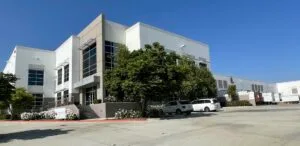
Industrial is the most competitive asset class in the market, and the gap between well-located and secondary product is wider here than most investors expect. Class A facilities near the I-15 and Ontario Airport hold occupancy through supply cycles because their tenant base has no comparable alternative in the IE, while secondary-location product is more exposed to the broader regional supply increase. Underwriting the difference correctly is where deals are won or lost.
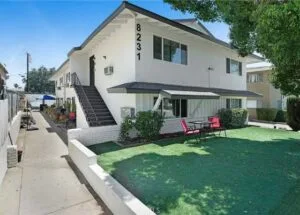
Multifamily trades on the durability of rental demand rather than short-term rent spikes. Coastal in-migration and homeownership barriers keep the renter pool deep, and well-located product near transit and lifestyle nodes has held stable occupancy. The value-add opportunities tend to sit in older stock where repositioning can move rents toward market.
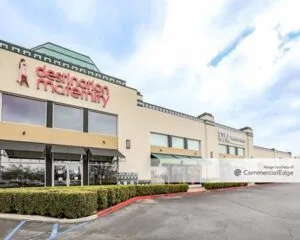
Retail performance splits sharply by location and format. Assets anchored near Victoria Gardens or on high-traffic stretches of Foothill Boulevard behave very differently from secondary strip centers. Single-tenant net-lease product with strong credit tenants trades at a premium, while repositioning older retail into mixed-use formats is where much of the upside is emerging.
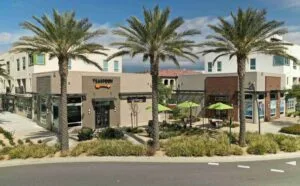
Office in Rancho Cucamonga is a medical and professional-services story, not a corporate-headquarters one. Medical office near healthcare clusters has proven the most durable format, supported by the growth of the local healthcare employment base. General office demand is more selective, favoring newer, amenity-rich buildings near transit and retail over older commodity space.
Those are the four asset classes that drive the most transaction volume, but LIG works across the full range of commercial property in the market. The grid below breaks down every type and the specific subtypes and locations where demand concentrates.
Commercial Property Types We Are Experts In
Built for execution. Backed by local insight.
The four asset classes above cover most of the volume trades, but they are only part of what LIG handles. We help investors, developers, and owner-users make confident moves across Rancho Cucamonga’s most active corridors. Whether you are targeting stabilized income, value-add repositioning, or owner-occupied real estate, our team understands the strategy behind each asset class.
Office Property
- Medical Offices: Along Haven Ave and Foothill Blvd with high demand from private practices
- Professional Suites: Ideal for finance, legal, or admin firms
- Owner-User Offices: Great for buyers seeking to occupy space
- Mixed-Use Office-Retail: Located near Victoria Gardens and Civic Center area
Industrial Property
- Distribution Warehouses: High demand near I-15 and SR-210 for last-mile logistics
- Manufacturing Facilities: Mid-size and heavy-use options in designated industrial zones
- Truck Terminals and Yards: Key logistics access near Haven Ave and Arrow Route
- Flex Industrial: Office-warehouse hybrids ideal for tech, trade, and contractors
Retail Property
- Neighborhood Shopping Centers: Anchored by grocery or service tenants, often near Baseline or Carnelian
- Strip Retail: High-visibility units along Foothill Blvd and Vineyard Ave
- Single-Tenant NNN: Strong demand for brand tenants such as Starbucks and AutoZone
- Mixed-Use Retail: Ground-floor retail in walkable zones like the Victoria Gardens area
Multifamily Property
- Mid-Size Apartment Complexes: 10 to 50 units near residential corridors or college
- Small Multifamily (2 to 4 Units): Ideal for investors targeting stable rental demand
- Short-Term Rental-Ready Units: Properties near travel corridors or with ADU potential
- Value-Add Properties: Older stock with upside through renovation or repositioning
Hospitality Property
- Limited-Service Hotels: Popular near freeway exits for business and travel stays
- Boutique or Independent Hotels: Niche options near downtown or high-traffic corridors
- Motel Properties: Older properties with repositioning or redevelopment potential
- Owner-Operated Lodging: Attractive to buyers seeking SBA financing or operational control
Healthcare Property
- Medical Office Buildings: High interest near medical centers or outpatient clusters
- Clinics and Specialty Use: Properties suitable for dental, dermatology, or dialysis
- Surgical Centers: Facilities with medical buildouts or license-ready space
- Senior Living and Care: Assisted living, rehab, and memory care near residential zones
Agricultural Property
- Farmland: Typically on the edges of the city, well-suited for land banking or specialty agriculture
- Nurseries or Plant Yards: Supports Inland Empire landscaping, nursery, and supply operations
- Equestrian or Livestock Land: Unique parcels often found in unincorporated foothill areas
- Agricultural Holdings: Larger holdings positioned for long-term appreciation or future development
Land Property
- Entitled Development Sites: Prime parcels positioned for office, multifamily, or industrial development
- Raw or Unentitled Land: Strategic holdings awaiting future rezoning, often along major freeway corridors
- Infill Lots: Smaller sites in core areas suited for tailored, custom projects
- Mixed-Use Zoning: Flexible-use properties near transit lines and civic hubs, ready for adaptive development
Special Purpose Property
- Auto Service and Repair: Mechanic shops, tire centers, and body repair facilities with roll-up doors
- Religious or Assembly Halls: Community properties offering ample parking and gathering space
- Charter Schools and Childcare: Growing demand for buildings suited to private schools and tutoring centers
- Event Venues and Banquet Halls: Specialty properties with unique zoning and high-capacity layouts
Meet Your Team


Albert and Anthony Le, Managing Partners, lead a team of CRE professionals who bring deep local insight and asset-specific expertise to every transaction. Albert Le leads deal execution and brings direct transaction experience across the corridors described above.
Learn more about Albert Le, Licensed Broker.
The partners lead a trusted group of professionals who support every stage of a transaction. Meet the rest of our team.
How We Work With Clients
LIG operates as a full-service platform rather than a transaction-only brokerage, which matters in a market where the right move often depends on financing structure, asset analysis, and timing as much as on the deal itself. Three core services support that.

Advisory Services
Comprehensive asset analysis and underwriting to assess and maximize current and future returns.

Financing
Competitive financing across product types, from conventional loans to bridge financing.

Brokerage Services
Representation in the acquisition and disposition of commercial real estate assets.
Those services span advisory, valuation, asset management, brokerage, and financing, so that clients buying, selling, exchanging, or repositioning can align every decision with a single strategy rather than assembling it from separate providers.
LIG Market Moves: Closed Deals and What Is Available
We do not just list, we close. The clearest evidence of what LIG can do in this market is the record of completed transactions and the current inventory, both of which are the natural next step for an investor who has canvassed the market and is ready to act.
See our closed deals for a record of completed transactions across asset classes and corridors.
Explore available listings for current opportunities, and contact us for the most up-to-date list since inventory changes weekly.
FAQs: Rancho Cucamonga Commercial Real Estate Brokerage
Whether you’re investing, expanding, or just exploring your options, here’s how our team can support you.
Have a Specific Goal? Let Us Make It Happen.
Rancho Cucamonga rewards investors who understand how it trades and who have the deal access to act when the right opportunity appears. That is what working with LIG provides: the market knowledge to canvas with confidence and the execution to close.
Still researching the market? Start with our Rancho Cucamonga commercial real estate market guide for the full picture before you act.
Rancho Cucamonga
Commercial Real Estate Brokerage
20+ Years of Tailored Strategies Delivering Maximum Returns
Whether you are selling a property, acquiring your next asset, growing a portfolio, securing financing, or weighing your options before you commit, the decision comes down to one thing: working with a team that knows how this specific market trades. That is what the rest of this page is about.
Want to discuss your needs in detail? Give us a call at +1 (909) 256-7889
Monday – Friday 10AM – 6PM
Le Investment Group Track Record Of Success
The clearest measure of what a brokerage knows about a market is what it has closed in that market. Le Investment Group has completed more than $2.5 billion in commercial real estate transactions across Rancho Cucamonga and California, and was recognized as a 2024 CoStar Power Broker, an award based on verified transaction volume rather than self-reported claims.
That volume is not just a credential. It is the source of the pattern recognition this market rewards: which corridors hold value when new supply comes online, which asset classes have outperformed through changing cycles, and where pricing sits relative to what sellers are asking. The sections below reflect that perspective.
Years of Experience
Closed Transactions in 2024
Commercial Sales Last 24 Months
Total Value of Active Inventory
Current Listings Count
In Commercial Real Estate Sold
Total Number of Closed Transactions
Achieving Successful Transactions with Unmatched Expertise and Service
Note: Active inventory changes weekly. Contact us for the most up-to-date list.
Why Investors Are Canvassing Rancho Cucamonga
Rancho Cucamonga sits roughly 40 miles east of Los Angeles, at the point where Greater LA meets the Inland Empire. For investors, that location does specific work: it puts an asset within reach of the LA consumer base while keeping it on Inland Empire cost basis, with direct access to Interstates 10, 15, and 210 and a ten-minute drive to Ontario International Airport. That combination is what draws capital to canvas this market rather than the submarkets around it.
For a fuller treatment of the market fundamentals behind that interest, see our Rancho Cucamonga commercial real estate article, which covers the demographics, infrastructure, and long-term trajectory in depth, and our Rancho Cucamonga CRE market infographic for the population, employment, and logistics data behind it. This page is about something more specific: how the market actually trades, corridor by corridor and asset class by asset class, and how LIG helps clients act on it.
How the Rancho Cucamonga Market Breaks Down by Corridor
Rancho Cucamonga does not trade as a single market. It trades as a set of distinct corridors, each with its own demand drivers, tenant base, and pricing logic. Knowing which corridor an asset sits in matters more than any citywide average, and it is the first thing any serious canvassing effort should map.
The I-15 and Ontario Airport industrial zone: This is the corridor drawing the most institutional interest. Distribution, last-mile logistics, and manufacturing tenants concentrate here because of freeway access and airport proximity that the rest of the IE cannot match. It is the most liquid corridor in the market and the one where competition for stabilized assets is most intense. It is also the most established, which makes the next corridor a different exercise entirely.
Foothill Boulevard and Haven Avenue: Here the logic shifts from freeway logistics to foot traffic and proximity. This is the retail and office spine of the city, where performance is driven by traffic counts, established retail density, and closeness to the employment base. Properties near the Victoria Gardens node and the Haven Avenue business corridor command the strongest tenant demand in this segment. Both of these corridors trade on proven, stabilized performance. The third does not.
The Cucamonga Station and HART District area: This is the forward-looking corridor, and it trades on anticipation rather than track record. Assets here are being positioned ahead of the transit-oriented demand that Brightline West and the multimodal station will bring. The pricing reflects that expectation rather than stabilized performance, which changes the underwriting entirely.
Investor demand has been rising across all three, which tightens competition for stabilized assets and widens the gap between a well-negotiated entry and an overpay. Knowing where an asset sits in that structure is where deal access and local relationships start to matter, and it is where LIG has closed across every one of these corridors.
What LIG Sees Across Each Asset Class
Corridor is only one axis of this market. The other is asset class, and each one in Rancho Cucamonga trades on a logic of its own. The practitioner read below reflects what LIG has observed transacting across each, and it is the level of detail an investor canvassing the market needs before committing to a strategy.
Industrial is the most competitive asset class in the market, and the gap between well-located and secondary product is wider here than most investors expect. Class A facilities near the I-15 and Ontario Airport hold occupancy through supply cycles because their tenant base has no comparable alternative in the IE, while secondary-location product is more exposed to the broader regional supply increase. Underwriting the difference correctly is where deals are won or lost.
Multifamily trades on the durability of rental demand rather than short-term rent spikes. Coastal in-migration and homeownership barriers keep the renter pool deep, and well-located product near transit and lifestyle nodes has held stable occupancy. The value-add opportunities tend to sit in older stock where repositioning can move rents toward market.
Retail performance splits sharply by location and format. Assets anchored near Victoria Gardens or on high-traffic stretches of Foothill Boulevard behave very differently from secondary strip centers. Single-tenant net-lease product with strong credit tenants trades at a premium, while repositioning older retail into mixed-use formats is where much of the upside is emerging.
Office in Rancho Cucamonga is a medical and professional-services story, not a corporate-headquarters one. Medical office near healthcare clusters has proven the most durable format, supported by the growth of the local healthcare employment base. General office demand is more selective, favoring newer, amenity-rich buildings near transit and retail over older commodity space.
Those are the four asset classes that drive the most transaction volume, but LIG works across the full range of commercial property in the market. The grid below breaks down every type and the specific subtypes and locations where demand concentrates.
Commercial Property Types We Are Experts In
Built for execution. Backed by local insight.
The four asset classes above cover most of the volume trades, but they are only part of what LIG handles. We help investors, developers, and owner-users make confident moves across Rancho Cucamonga’s most active corridors. Whether you are targeting stabilized income, value-add repositioning, or owner-occupied real estate, our team understands the strategy behind each asset class.
Office Property
- Medical Offices: Along Haven Ave and Foothill Blvd with high demand from private practices
- Professional Suites: Ideal for finance, legal, or admin firms
- Owner-User Offices: Great for buyers seeking to occupy space
- Mixed-Use Office-Retail: Located near Victoria Gardens and Civic Center area
Industrial Property
- Distribution Warehouses: High demand near I-15 and SR-210 for last-mile logistics
- Manufacturing Facilities: Mid-size and heavy-use options in designated industrial zones
- Truck Terminals and Yards: Key logistics access near Haven Ave and Arrow Route
- Flex Industrial: Office-warehouse hybrids ideal for tech, trade, and contractors
Retail Property
- Neighborhood Shopping Centers: Anchored by grocery or service tenants, often near Baseline or Carnelian
- Strip Retail: High-visibility units along Foothill Blvd and Vineyard Ave
- Single-Tenant NNN: Strong demand for brand tenants such as Starbucks and AutoZone
- Mixed-Use Retail: Ground-floor retail in walkable zones like the Victoria Gardens area
Multifamily Property
- Mid-Size Apartment Complexes: 10 to 50 units near residential corridors or college
- Small Multifamily (2 to 4 Units): Ideal for investors targeting stable rental demand
- Short-Term Rental-Ready Units: Properties near travel corridors or with ADU potential
- Value-Add Properties: Older stock with upside through renovation or repositioning
Hospitality Property
- Limited-Service Hotels: Popular near freeway exits for business and travel stays
- Boutique or Independent Hotels: Niche options near downtown or high-traffic corridors
- Motel Properties: Older properties with repositioning or redevelopment potential
- Owner-Operated Lodging: Attractive to buyers seeking SBA financing or operational control
Healthcare Property
- Medical Office Buildings: High interest near medical centers or outpatient clusters
- Clinics and Specialty Use: Properties suitable for dental, dermatology, or dialysis
- Surgical Centers: Facilities with medical buildouts or license-ready space
- Senior Living and Care: Assisted living, rehab, and memory care near residential zones
Agricultural Property
- Farmland: Typically on the edges of the city, well-suited for land banking or specialty agriculture
- Nurseries or Plant Yards: Supports Inland Empire landscaping, nursery, and supply operations
- Equestrian or Livestock Land: Unique parcels often found in unincorporated foothill areas
- Agricultural Holdings: Larger holdings positioned for long-term appreciation or future development
Land Property
- Entitled Development Sites: Prime parcels positioned for office, multifamily, or industrial development
- Raw or Unentitled Land: Strategic holdings awaiting future rezoning, often along major freeway corridors
- Infill Lots: Smaller sites in core areas suited for tailored, custom projects
- Mixed-Use Zoning: Flexible-use properties near transit lines and civic hubs, ready for adaptive development
Special Purpose Property
- Auto Service and Repair: Mechanic shops, tire centers, and body repair facilities with roll-up doors
- Religious or Assembly Halls: Community properties offering ample parking and gathering space
- Charter Schools and Childcare: Growing demand for buildings suited to private schools and tutoring centers
- Event Venues and Banquet Halls: Specialty properties with unique zoning and high-capacity layouts
Meet Your Team
Albert and Anthony Le, Managing Partners, lead a team of CRE professionals who bring deep local insight and asset-specific expertise to every transaction. Albert Le leads deal execution and brings direct transaction experience across the corridors described above.
Learn more about Albert Le, Licensed Broker.
The partners lead a trusted group of professionals who support every stage of a transaction. Meet the rest of our team.
How We Work With Clients
LIG operates as a full-service platform rather than a transaction-only brokerage, which matters in a market where the right move often depends on financing structure, asset analysis, and timing as much as on the deal itself. Three core services support that.
Advisory Services
Comprehensive asset analysis and underwriting to assess and maximize current and future returns.
Financing
Competitive financing across product types, from conventional loans to bridge financing.
Brokerage Services
Representation in the acquisition and disposition of commercial real estate assets.
Those services span advisory, valuation, asset management, brokerage, and financing, so that clients buying, selling, exchanging, or repositioning can align every decision with a single strategy rather than assembling it from separate providers.
LIG Market Moves: Closed Deals and What Is Available
We do not just list, we close. The clearest evidence of what LIG can do in this market is the record of completed transactions and the current inventory, both of which are the natural next step for an investor who has canvassed the market and is ready to act.
See our closed deals for a record of completed transactions across asset classes and corridors.
Explore available listings for current opportunities, and contact us for the most up-to-date list since inventory changes weekly.
FAQs: Rancho Cucamonga Commercial Real Estate Brokerage
Whether you’re investing, expanding, or just exploring your options, here’s how our team can support you.
Have a Specific Goal? Let Us Make It Happen.
Rancho Cucamonga rewards investors who understand how it trades and who have the deal access to act when the right opportunity appears. That is what working with LIG provides: the market knowledge to canvas with confidence and the execution to close.
Still researching the market? Start with our Rancho Cucamonga commercial real estate market guide for the full picture before you act.
Le Investment Group
Join hundreds of investors and property owners who’ve achieved exceptional outcomes with LIG
Get Exclusive Insights